When people think of Japanese pop culture, anime, manga, and video games often come to mind. Yet another uniquely Japanese hobby has quietly gained a passionate global following: plastic model kits, known in Japan simply as puramo.
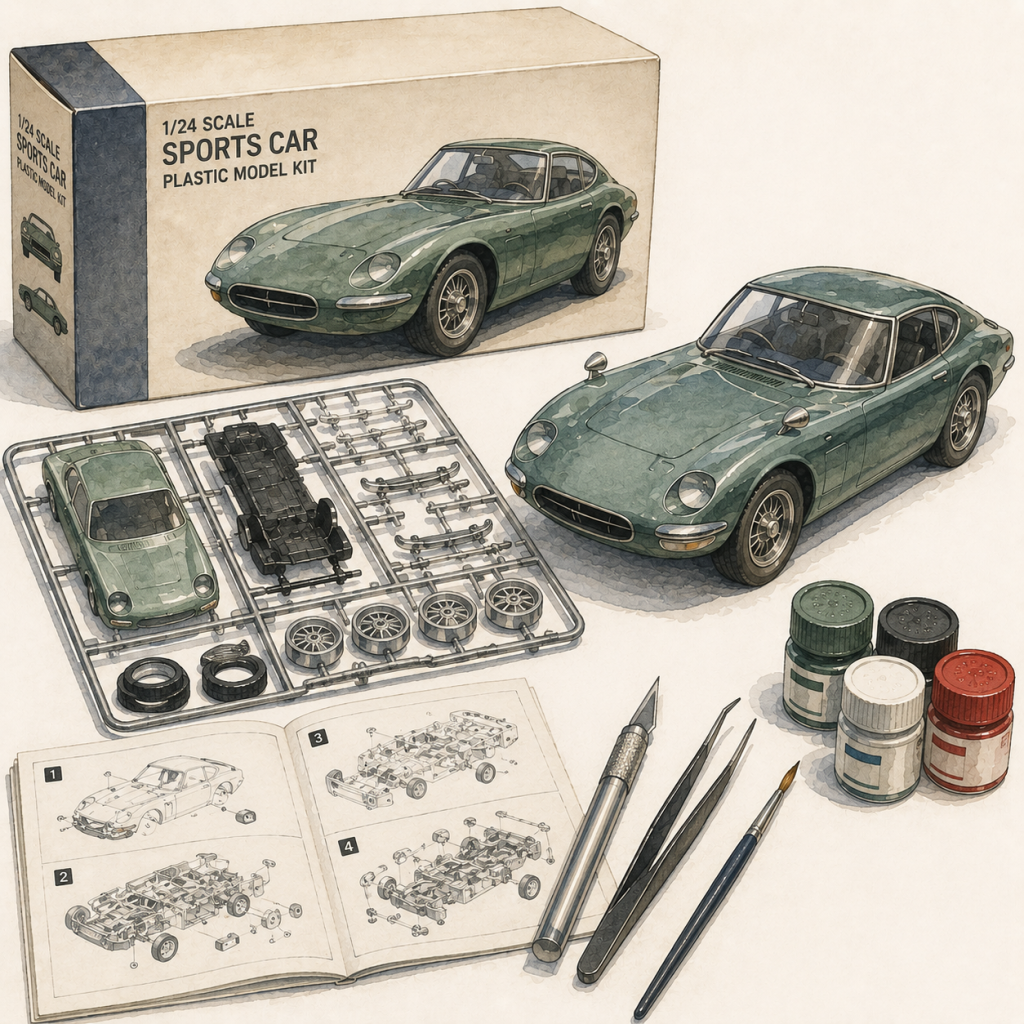
From giant robots and military vehicles to sports cars and famous castles, Japanese model kits are admired not only for their detailed designs but also for the craftsmanship they inspire. Building a model is more than assembling pieces of plastic—it is an experience that reflects Japan’s appreciation for precision, patience, and creativity.
Japan’s plastic model industry began to flourish during the 1960s as the country’s manufacturing capabilities rapidly advanced. Companies developed increasingly sophisticated production techniques, allowing them to create highly detailed parts that fit together with remarkable accuracy. Over time, Japanese manufacturers earned an international reputation for quality, making their products favorites among hobbyists worldwide.
Today, many newcomers first discover model building through Gunpla, the plastic model kits based on the Gundam anime series. Unlike traditional scale models that require glue and paint, most Gunpla kits can be assembled without special tools. The parts snap together cleanly, making them accessible even for beginners while still offering enough complexity to satisfy experienced builders.
However, the appeal of Japanese model kits extends far beyond Gundam. Enthusiasts build realistic trains, historic warships, Formula One cars, motorcycles, architectural landmarks, dinosaurs, and even miniature Japanese street scenes. Every finished model tells a story, combining engineering with personal creativity.
One reason Japanese model kits stand out is their exceptional attention to detail. Designers carefully study the original subject, whether it is a fighter aircraft or a classic sports car, to reproduce it as accurately as possible. The result is a hobby that encourages observation, concentration, and respect for craftsmanship.
Model building also reflects an important aspect of Japanese culture: the pursuit of continuous improvement. Many builders never consider a model truly “finished.” They repaint surfaces, add weathering effects, customize parts, or create elaborate dioramas. This dedication to refining one’s work echoes the Japanese philosophy of kaizen, the idea that small improvements over time lead to excellence.
In Japan, hobby shops are destinations in themselves. Districts such as Akihabara in Tokyo feature multi-floor stores filled with thousands of model kits, tools, paints, and display accessories. Visitors can spend hours exploring shelves packed with products that range from beginner-friendly kits to highly specialized collector’s editions.
The popularity of Japanese model kits has also created global communities. Builders share their work on social media, participate in competitions, and exchange techniques across countries and cultures. Although they may speak different languages, they share a common appreciation for craftsmanship and creativity.
If you visit Japan, consider bringing home a model kit instead of a typical souvenir. Building it later allows you to relive your journey piece by piece while gaining a deeper appreciation for Japan’s design philosophy and manufacturing excellence.
Plastic model kits may seem like simple toys at first glance. In reality, they represent something much greater: a tradition of craftsmanship, imagination, and careful attention to detail. For many people around the world, assembling a Japanese model kit is not just a hobby—it is a meaningful way to connect with the spirit of Japanese creativity.