When people think of Japanese sweets, colorful mochi, elegant wagashi, or beautifully packaged chocolates often come to mind. Yet for many Japanese people, the sweetest memories come from something much simpler: dagashi.
Dagashi are inexpensive Japanese snacks and candies that have delighted children for generations. While most cost only a few dozen yen, they represent much more than affordable treats. They tell a story about childhood, community, and everyday life in Japan.
The word dagashi literally means “trivial sweets.” Unlike luxury confectionery, dagashi were designed to be accessible to everyone. After school, children would visit small neighborhood candy shops called dagashiya, carrying just a handful of coins. The excitement was not about buying one expensive item, but choosing several different snacks within a limited budget.
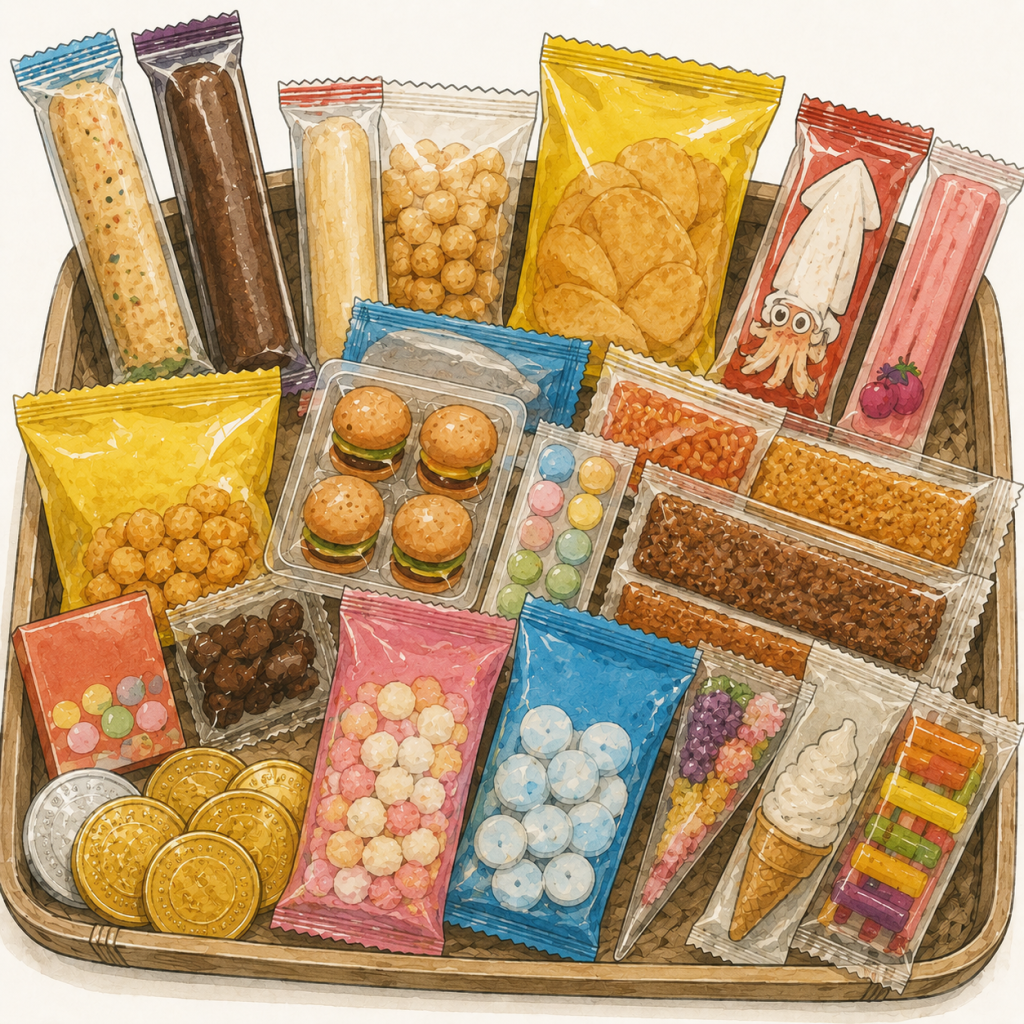
Walking into a traditional dagashiya is a unique experience. Shelves are packed with brightly colored packages, nostalgic toys, chewing gum, chocolate, dried seafood snacks, and tiny DIY candy kits. There are no luxury displays or premium branding—only the joyful feeling of discovery. Many Japanese adults still remember carefully calculating how to spend 100 yen while trying to maximize the number of treats they could buy.
Dagashi also reflects Japan’s remarkable creativity. Rather than focusing only on sweetness, many products offer surprising flavors and playful experiences. Some candies change color, others fizz in your mouth, and many encourage children to mix ingredients or create miniature edible creations. Popular snacks include Umaibo, a puffed corn stick available in dozens of flavors, and Fugashi, a traditional wheat snack coated with brown sugar.
Perhaps the most distinctive feature of dagashi is its strong connection to local communities. In the past, the neighborhood dagashiya served as an informal gathering place where children met friends, talked with shop owners, and learned simple lessons about money and responsibility. These small stores helped build relationships between generations and created a sense of belonging that many people still remember with affection.
Although convenience stores and supermarkets have replaced many traditional dagashiya, interest in dagashi has grown once again. Visitors to Japan often seek these nostalgic snacks as unique souvenirs, while museums and specialty shops preserve the culture of classic Japanese candy. For many travelers, tasting dagashi offers an authentic glimpse into everyday Japanese life beyond famous tourist attractions.
If you visit Japan, don’t overlook these humble sweets. Instead of searching only for premium desserts, step into a local dagashiya and spend just a few hundred yen. You may leave with colorful candies, unusual snacks, and perhaps a better understanding of how generations of Japanese children experienced simple happiness.
Dagashi reminds us that culture is not always found in grand temples or world-famous cuisine. Sometimes, it can be discovered in a tiny candy shop, a handful of coins, and the joyful excitement of choosing your favorite snack after school.
For visitors seeking a more authentic connection with Japan, dagashi offers something truly special: not just a taste of sweetness, but a taste of childhood itself.