Shibuya is always moving. It is simply not performing for us.
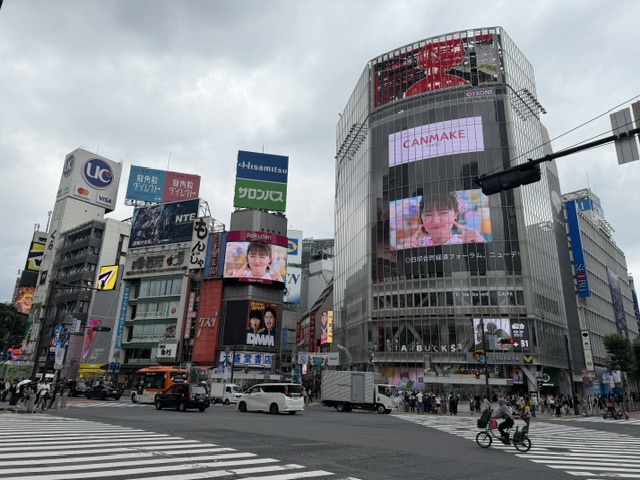
Shibuya Crossing is often shown as a symbol of Tokyo’s extraordinary crowds. Photographs and videos usually capture hundreds of people moving in every direction at once, creating the impression of a city that never slows down. Yet this photograph, taken on a weekday afternoon, tells a slightly different story.
The first thing we notice is space.
The famous crossing is not empty, but neither is it overwhelmed by pedestrians. Cars, trucks, bicycles, and people share the scene, while large areas of the striped crossing remain visible. This is an important reminder that Tokyo is not always as crowded as its global image suggests.
Timing changes the city.
On weekday mornings, commuters fill trains and stations. In the evening, workers, shoppers, students, and tourists create another wave of movement. But during the middle of the day, even one of Tokyo’s busiest intersections can feel surprisingly ordinary.
The photograph also reveals another characteristic of modern Tokyo: the coexistence of physical and digital space.
The buildings are covered with giant screens, advertisements, signs, and changing images. A person walking through the intersection is surrounded not only by architecture but by information. Faces appear several stories high. Brands compete for attention. Colors and messages constantly change.
Yet below these enormous screens, everyday life continues at a human scale.
A cyclist crosses the road. Delivery trucks move through the intersection. Small groups wait on the pavement. People walk toward shops, offices, cafés, and train platforms. The contrast is striking. Above, Tokyo appears spectacular and futuristic. At street level, people are simply going somewhere.
The cloudy sky adds another dimension to the scene. Without bright sunlight or dramatic evening lights, the intersection looks less like a tourist attraction and more like a functioning part of the city. This is Shibuya as residents may experience it: not a performance, but infrastructure.
The photograph also challenges the idea that Tokyo’s famous places exist mainly for visitors. Shibuya Crossing may be photographed millions of times, but it remains a real intersection. Delivery vehicles must pass through it. Workers cross it. Bicycles move between neighborhoods. The city cannot stop to become a postcard.
Perhaps this is what makes Tokyo so interesting. Its most iconic places continue to perform ordinary functions.
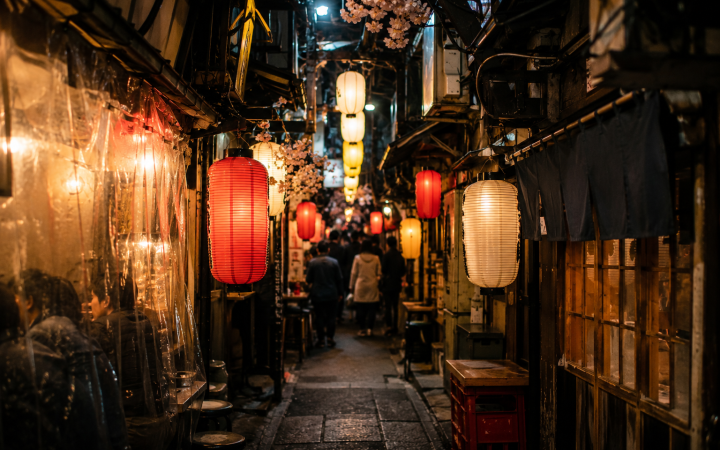
A temple may stand beside an office building. A tiny restaurant may exist beneath a railway line. One of the world’s most famous crossings can, for a few moments on a weekday afternoon, simply become a road.
Visitors often search for the most dramatic version of Tokyo: the biggest crowd, the brightest night, the perfect photograph. But everyday Tokyo may reveal something equally important.
The city has rhythms.
It expands and contracts. It becomes crowded and quiet. The same place can feel completely different depending on the hour, the weather, and the day of the week.
This photograph captures one of those quieter intervals.