In today’s fast-paced world, many people search for ways to slow down, reduce stress, and reconnect with themselves. Surprisingly, one of Japan’s oldest spiritual practices offers a timeless answer. Zazen, or seated meditation, is far more than simply sitting quietly. It is a practice that has shaped Japanese culture, influenced the arts, and inspired countless people to appreciate the value of stillness.
The word zazen literally means “seated meditation.” It is the central practice of Zen Buddhism, which was introduced to Japan from China during the 12th and 13th centuries. While Zen has spread around the world, Japan remains one of the best places to experience zazen in its traditional setting, surrounded by peaceful temples and centuries of history.
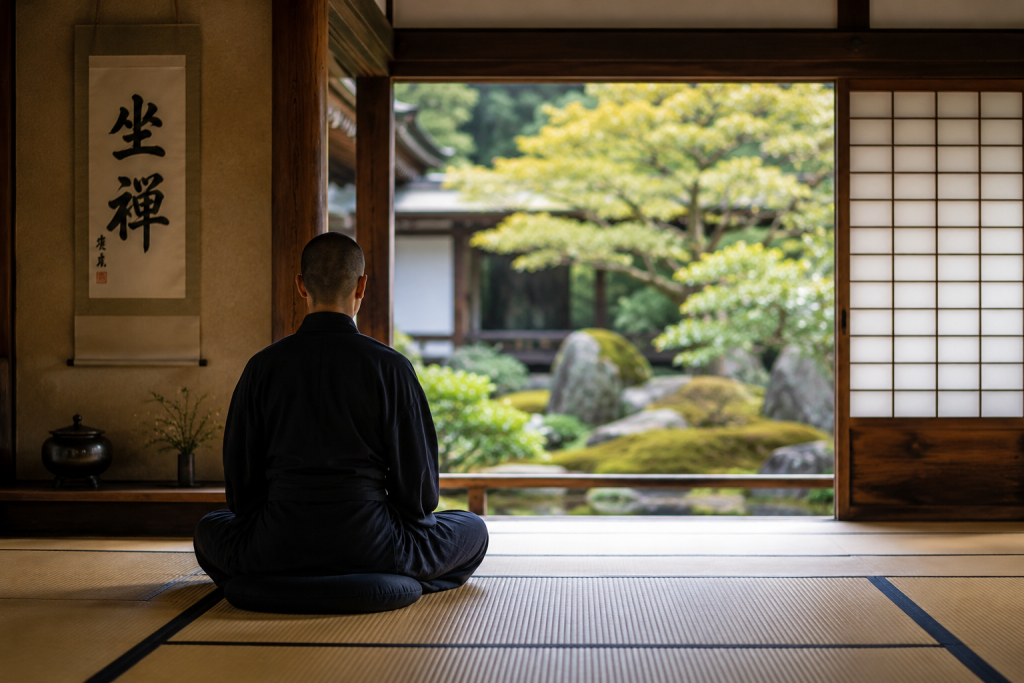
Unlike many forms of meditation that focus on relaxation or visualization, zazen emphasizes simply being present. Practitioners sit with a straight back, regulate their breathing, and allow thoughts to come and go without chasing or resisting them. The goal is not to empty the mind completely but to observe it with calm awareness.
At first glance, zazen appears simple. There are no elaborate rituals or complicated techniques. Yet anyone who has tried sitting quietly for even ten minutes knows that stillness can be surprisingly challenging. The practice encourages patience, discipline, and acceptance rather than immediate results.
This philosophy has influenced many aspects of Japanese culture. Traditional arts such as the tea ceremony, calligraphy, flower arranging, and martial arts all reflect the Zen appreciation for concentration, simplicity, and mindful action. Even Japanese gardens, with their carefully balanced rocks, moss, and flowing water, invite visitors to slow down and experience quiet observation.
One of the most remarkable aspects of zazen is its relationship with silence. In many cultures, silence is seen as something awkward that should quickly be filled with conversation. In Japan, however, silence often carries its own meaning. It can represent respect, reflection, or a deeper understanding that goes beyond words. Zazen embraces this silence as an opportunity to become more aware of both the surrounding world and one’s own thoughts.
Today, many temples across Japan welcome visitors who wish to experience zazen, even if they have no religious background. Sessions are often held in beautiful wooden meditation halls where participants sit together under the guidance of Buddhist monks. The experience is surprisingly accessible, requiring nothing more than comfortable clothing, an open mind, and a willingness to be still.
For international travelers, joining a zazen session offers something that sightseeing alone cannot provide. While famous landmarks reveal Japan’s history and architecture, meditation allows visitors to experience a part of Japanese culture from within. Even a single session can provide a memorable contrast to the energy of cities like Tokyo or Osaka.
Perhaps the greatest lesson of zazen is that happiness does not always come from doing more. Instead, it reminds us that clarity often appears when we stop rushing and simply pay attention to the present moment. In a society that constantly demands productivity, this message feels more relevant than ever.
If your journey takes you to Japan, consider spending an hour at a Zen temple. Sit quietly, listen to the sounds around you, and notice how your breathing gradually slows. You may discover that the true beauty of Japan is not only found in its temples, gardens, or mountains, but also in the quiet space within yourself.
Zazen is not about escaping the world. It is about learning to experience it more fully—one breath, one moment, and one peaceful silence at a time.