Few figures from Japanese history have captured the world’s imagination as powerfully as the samurai and the ninja. They appear everywhere today—in films, anime, video games, and novels—but the real history behind these legendary figures is far more fascinating than fiction. For visitors to Tokyo, discovering their stories offers an exciting way to explore Japan’s warrior culture.
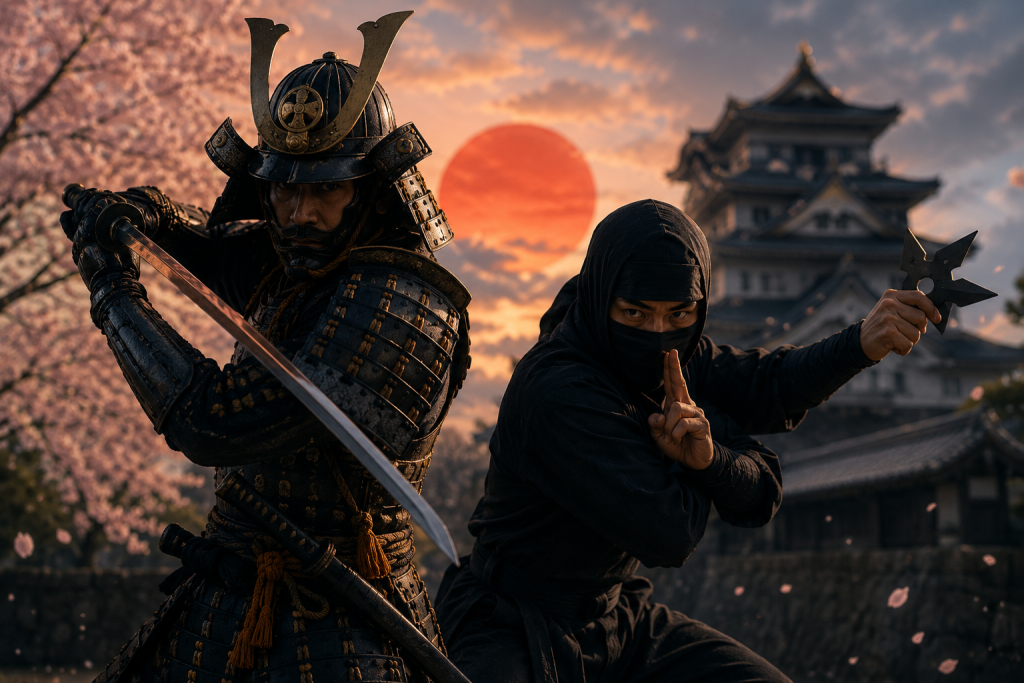
The samurai were members of Japan’s warrior class. For centuries, they served powerful lords, protected territories, and played major roles in politics and warfare. Their most famous weapon was the Japanese sword, or katana, but being a samurai involved much more than sword fighting. Loyalty, discipline, military skill, education, and social responsibility were all important parts of samurai life.
During the peaceful Edo period, beginning in the early seventeenth century, the role of the samurai gradually changed. Many became administrators, scholars, and officials rather than battlefield warriors. This is one reason Tokyo—formerly known as Edo—is an especially interesting place to explore samurai history.
Ninja, historically known as shinobi, belonged to a different world. Rather than fighting openly on battlefields, they became associated with intelligence gathering, infiltration, surveillance, and covert operations. Popular culture often presents ninja as mysterious warriors dressed entirely in black, disappearing in clouds of smoke. The historical reality was less theatrical but equally fascinating.
A successful ninja needed to avoid attention. Disguise, observation, local knowledge, patience, and the ability to move unnoticed were often more valuable than dramatic combat skills. Tools now associated with ninja, including the shuriken, have become global symbols, but the true strength of the shinobi was adaptability.
This contrast makes samurai and ninja especially interesting. The samurai represented visible authority and social status; the ninja operated through secrecy and information. One stood at the center of Japan’s political order, while the other has come to symbolize hidden knowledge and unconventional strategy.
Today, visitors can explore both worlds through interactive cultural experiences in Tokyo. The Samurai Ninja Museum offers exhibitions of armor, swords, and historical objects alongside activities designed to make the past more accessible. Visitors can try on samurai armor and experience ninja-style activities such as shuriken throwing. The museum also provides guided explanations of the history, legends, and common misconceptions surrounding both traditions.
For international travelers, this hands-on approach can be particularly enjoyable. Looking at an old suit of armor in a display case is interesting; wearing armor and feeling its weight creates a very different understanding of the people who once used it. Similarly, trying to hit a target with a shuriken reveals that ninja skills required concentration and practice rather than supernatural powers.
Tokyo may seem like one of the world’s most modern cities, but traces of its warrior past remain beneath the surface. The city’s history as Edo, the seat of the Tokugawa shogunate, connects modern Tokyo directly to the age of the samurai.
Whether you are a history enthusiast, a martial arts fan, or simply curious about Japanese culture, exploring the world of samurai and ninja adds another dimension to a visit to Tokyo. Behind the swords, armor, masks, and legends are stories about discipline, intelligence, loyalty, and survival.
The most exciting discovery may be that the real history is even more compelling than the myths.